


Skytells CEO Dr. Hazem Ali Participates in High-Level Presidential Conference
Cairo, March 11, 2026 — Skytells today announced the participation of its Founder and CEO, Dr. Hazem Ali, in a distinguished high-level conference held under the Presidency of the Arab Republic of Egypt, bringing together senior national leaders, ministers, prime ministers, and prominent figures in an important setting for dialogue, national engagement, and the exchange of perspectives.
Dr. Hazem Ali expressed his sincere appreciation for the official invitation and for the exceptional organization led by the Egyptian Armed Forces and the Presidency.
I am honored to have been officially invited to this distinguished gathering held under the Presidency. My sincere appreciation goes to H.E. Lieutenant General Ashraf Salem Zaher, Commander-in-Chief of the Armed Forces and Minister of Defense and Military Production, for the gracious invitation, and to the Egyptian Armed Forces and the Presidency for the exceptional organization of this important conference.
A Conference at the Highest Level
During the conference, Dr. Hazem Ali met with H.E. President Abdel Fattah El-Sisi, President of the Arab Republic of Egypt, in addition to meeting with senior officials, prime ministers, ministers, and distinguished national figures. These engagements reflected the level of significance of the gathering and the quality of dialogue taking place among leaders shaping the future direction of the region.
Discussions on Digital Transformation and AI Strategy
On the sidelines of the conference, Dr. Hazem Ali held conversations with officials on how Skytells can contribute to digital transformation in the Middle East, with particular focus on the role of artificial intelligence, digital infrastructure, enterprise systems, and practical innovation in enabling long-term progress.
These discussions were not framed around technology as a trend. They were grounded in a more important question: how can advanced systems create real operational value in environments where scale, trust, resilience, and execution matter.
That question is increasingly central across the Middle East and well beyond it.
The Shift Toward Engineering Depth
The AI industry is entering a more serious phase. For years, much of the public conversation focused on model novelty, speed of experimentation, and rapid demonstrations of capability. That period helped accelerate awareness, but it also created noise. Today, institutions and decision-makers are moving toward a more mature standard. They want to understand not only what AI can do, but what it takes to deploy it responsibly, operate it reliably, integrate it effectively, and scale it in ways that produce measurable outcomes.
This is where engineering depth begins to matter more than marketing language.
At Skytells, the focus has long been on building advanced platforms, intelligent systems, and enterprise-grade technologies that can move beyond concept and into real operating environments. That means designing for performance, governance, resilience, observability, and long-term use. It means recognizing that useful AI is not only about models. It is about the full system around them: infrastructure, control layers, deployment patterns, security boundaries, cost discipline, and trust.
Why These Conversations Matter
High-level gatherings create a rare environment where leadership, strategy, and execution can intersect in a meaningful way. They are important not simply because of who is present, but because of what becomes possible when different perspectives meet in the same room.
For technology leaders, these moments matter because the future of AI is no longer being shaped only inside product teams or research environments. It is increasingly shaped through conversations with institutions, governments, enterprises, and leaders responsible for national priorities, digital capability, and long-term competitiveness.
From Questions to Architecture
Instead of asking whether AI is important, serious stakeholders are asking what kind of AI infrastructure is required, how digital systems can be built to last, which capabilities are strategically meaningful, and how innovation can be directed toward outcomes that support real development rather than temporary excitement.
Those are the right questions.
They require more than enthusiasm for new tools. They require architectural thinking, implementation maturity, and clarity about how digital capability is actually created. In many cases, the difference between a successful transformation effort and a failed one is not the ambition behind it. It is the quality of execution beneath it.
The Regional Opportunity for AI
The Middle East is moving into a period where digital transformation is becoming more structural, more ambitious, and more consequential. Organizations across the region are looking beyond surface-level modernization and toward systems that can strengthen institutions, improve delivery, support scale, and expand national capability.
Artificial intelligence has a real role to play in that shift, but only when approached with seriousness.
What Real Transformation Requires
Real transformation requires more than adding intelligent features to existing workflows. It requires modern digital foundations. It requires infrastructure that can support performance and reliability. It requires systems that can be integrated across environments. It requires governance that makes adoption sustainable. And it requires partners that understand how to bridge strategy with execution.
That is the context in which Skytells sees its role.
Beyond Pilot Phases
The company believes that the next chapter of AI in the region will be shaped by organizations that can translate technical capability into operational value. This includes enterprise AI systems, modern digital architecture, scalable platforms, secure deployment models, and intelligent infrastructure that supports institutions over time rather than only during pilot phases.
In this sense, AI is not a standalone category. It is part of a wider capability stack that includes software architecture, cloud and edge infrastructure, data systems, security controls, lifecycle governance, and real-world operating discipline.
Skytells’ Position in a Global AI Landscape
Skytells approaches AI as both a technical discipline and a systems discipline.
That distinction is increasingly important. Around the world, many organizations can demonstrate isolated AI capability. Far fewer can deliver production-grade systems that hold up under real conditions. The gap between a promising demo and a trusted deployed system is large. It includes latency behavior, architecture design, orchestration, scaling, observability, access control, model lifecycle management, and the deeper operational realities that determine whether a system remains dependable over time.
Where Global AI Leadership Is Being Defined
The future will not be led only by those who build powerful models. It will also be led by those who know how to operationalize intelligence responsibly, align it with institutional priorities, and deploy it through systems designed for resilience and scale.
Skytells sees this as one of the defining challenges and opportunities of the coming decade.
By focusing on advanced platforms, intelligent systems, and enterprise-grade execution, the company continues to position itself where AI capability meets practical transformation. That is especially relevant in a world where governments, enterprises, and national institutions are becoming more selective about which technologies they trust and which partners they rely on.
From Visibility to Value
Participation in a distinguished conference of this nature is meaningful, but its value ultimately lies in what follows. Visibility alone does not create progress. What creates progress is the ability to convert dialogue into capability, direction into systems, and intent into execution.
That is the standard Skytells believes matters most.
Building the Full Stack of Transformation
The role of an AI company today is not only to speak about the future. It is to help build it in ways that are concrete, durable, and useful. That requires understanding the full stack of transformation, from digital architecture and infrastructure readiness to practical deployment, security, governance, and operational continuity.
It also requires a human understanding of context.
Technology does not operate in isolation from institutions, priorities, or national trajectories. The most effective systems are built by teams that understand both the engineering and the environment in which that engineering will matter. This is one reason why high-level engagement remains important. It creates alignment between innovation and real-world direction.
For Skytells, that alignment is essential.
Leadership, Perspective, and Long-Term Execution
It was a privilege to reconnect with many respected leaders and decision-makers, and to take part in conversations that matter. We believe meaningful progress is built when leadership, execution, and innovation move together with clarity and purpose.
That perspective captures the wider importance of this moment.
The Role of Technology Leaders
Dr. Hazem Ali’s participation in the conference reflects a broader role that technology leaders increasingly play on the global stage. They are not only builders of systems. They are also contributors to the conversations that shape how those systems will be used, governed, and aligned with long-term priorities.
This is especially relevant in AI, where the quality of decisions made today will influence competitiveness, readiness, and resilience for years to come.
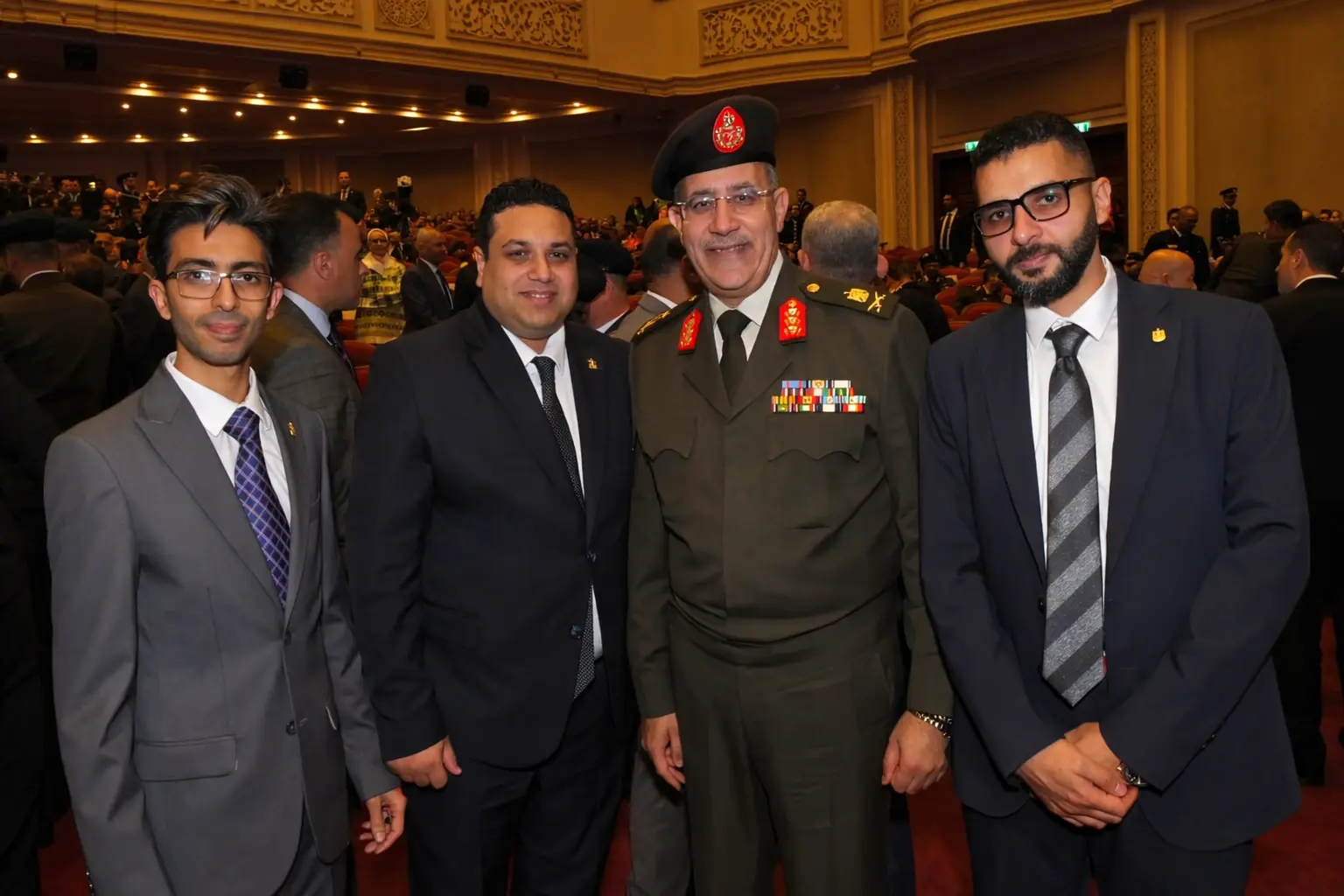
Dr. Hazem Ali also shared a number of moments from the conference, including photos with H.E. President Abdel Fattah El-Sisi, President of the Arab Republic of Egypt, along with several senior leaders and distinguished figures in attendance.
For Skytells, these moments are meaningful not simply because of their visibility, but because they reflect engagement at a level where technology, leadership, and long-term impact intersect.
A Continuing Commitment
Skytells remains committed to contributing where it can create real value — through AI, digital infrastructure, intelligent systems, and practical innovation. As the global conversation around AI continues to mature, the company believes that the strongest contributions will come from those who combine technical depth with execution discipline and who understand that enduring transformation is built through systems that can be trusted.
The Middle East's Role in AI
The company also believes that the Middle East has an important role to play in the future of AI globally. With the right infrastructure, talent, institutional readiness, and strategic direction, the region is positioned not only to adopt advanced technologies, but to help shape how they are applied in meaningful and lasting ways.
That is the kind of future Skytells is committed to helping build.
About Skytells
Skytells is an AI research and infrastructure company building the platforms, systems, and technologies that power the next generation of intelligent applications. With deep expertise in artificial intelligence, machine learning, enterprise architecture, and digital infrastructure, Skytells helps organizations design, deploy, and scale future-ready solutions across industries in the Middle East and beyond.
Learn more about Skytells, explore our AI solutions, or meet the team behind the technology.